
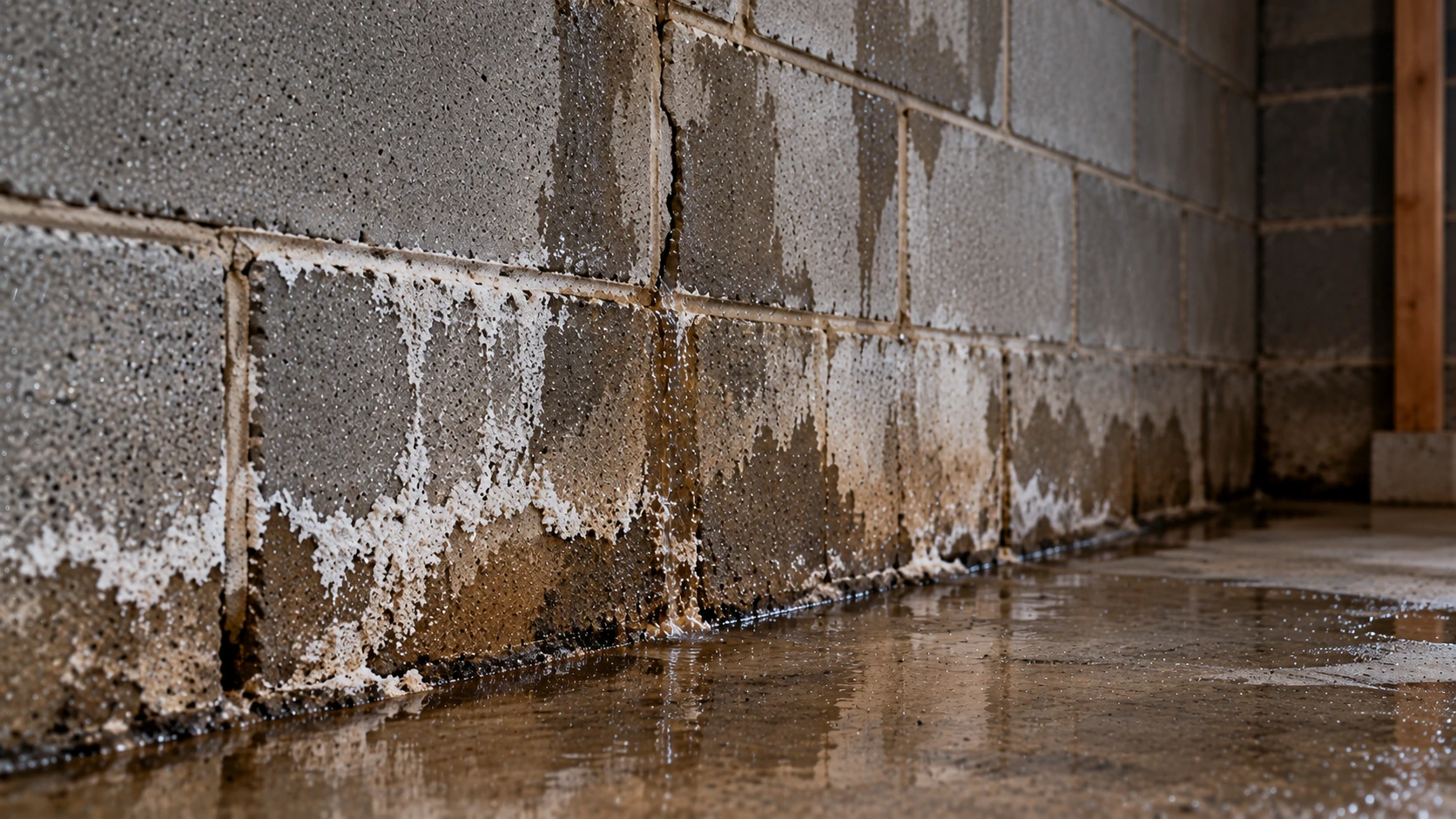
If you’ve noticed a musty smell, damp corners, or paint peeling off your basement wall after a heavy rain, you are not alone. Many homeowners first start wondering how to waterproof a cinder block basement wall when the problem keeps coming back no matter how often they wipe it dry.
This is especially common in Central Indiana, where clay-rich soil holds water, freeze-thaw cycles open up small cracks, and heavy spring rain can push moisture toward your foundation. In lower areas near the White River and Fall Creek, a high water table can make basement moisture even harder to ignore.
In this article, you’ll learn what causes moisture in cinder block walls, how to spot the warning signs early, and which solutions actually help without trapping water inside your basement walls. We’ll also explain when a simple repair is enough and when it’s smarter to call a professional for help.
Key Takeaways
- How to waterproof a cinder block basement wall starts with fixing the source of moisture, not just painting over stains.
- Interior drainage and a sump pump backup often work best when water is entering from around the floor or wall base. Learn more about our Basement Waterproofing Services.
- Cracks, bowing, and leaking joints may need repair before any coating is added. See our Foundation Crack Repair options.
- Humidity and poor airflow can keep basement walls damp even after leaks are fixed, which is why ventilation can matter too.
- Indianapolis homes often need a combined approach because clay soil and weather changes keep pushing moisture against the foundation.
- When in doubt, a professional inspection can help you choose the right fix before damage spreads.
Why Indianapolis Homeowners Face This Problem
In Indianapolis, cinder block basement walls are often under constant pressure from the soil around them. Clay-rich soil expands when wet and shrinks when dry, which means your foundation is always moving a little as the seasons change. That movement can open tiny gaps that let moisture in.
Freeze-thaw cycles make things worse. Water in or around the wall can freeze, expand, and create more cracking over time, especially in older homes across Marion County neighborhoods. Add humid summers and heavy spring storms, and it becomes easier to see why basement moisture is so common in Indianapolis and nearby cities like Carmel and Fishers.
Homes near rivers, creeks, or low-lying areas can face even more moisture pressure. That does not mean your basement is doomed, but it does mean how to waterproof a cinder block basement wall in Central Indiana usually requires more than a quick surface fix.
Common Causes of Moisture in Cinder Block Walls
Before you waterproof anything, it helps to know why the wall is getting wet in the first place. If you only cover the symptom, the water may still move through the block, collect inside the wall, or show up somewhere else in the basement.
- Cracks in the wall or mortar joints — Water can enter through tiny openings and spread along the block.
- Outside water not draining away — Gutters, downspouts, and grading problems can send water back toward the foundation.
- Pressure from wet soil — This is called hydrostatic pressure, which simply means water in the soil pushes against the wall.
- Weak or missing interior drainage — Water may collect at the floor edge instead of being directed to a sump pump.
- Condensation — Warm, moist air can hit cooler basement walls and form water droplets.
- Blocked airflow — Poor ventilation can let moisture stay in the basement longer than it should.
Warning Signs You Shouldn’t Ignore
- Musty smell in the basement — This often means moisture has been sitting long enough to affect the air.
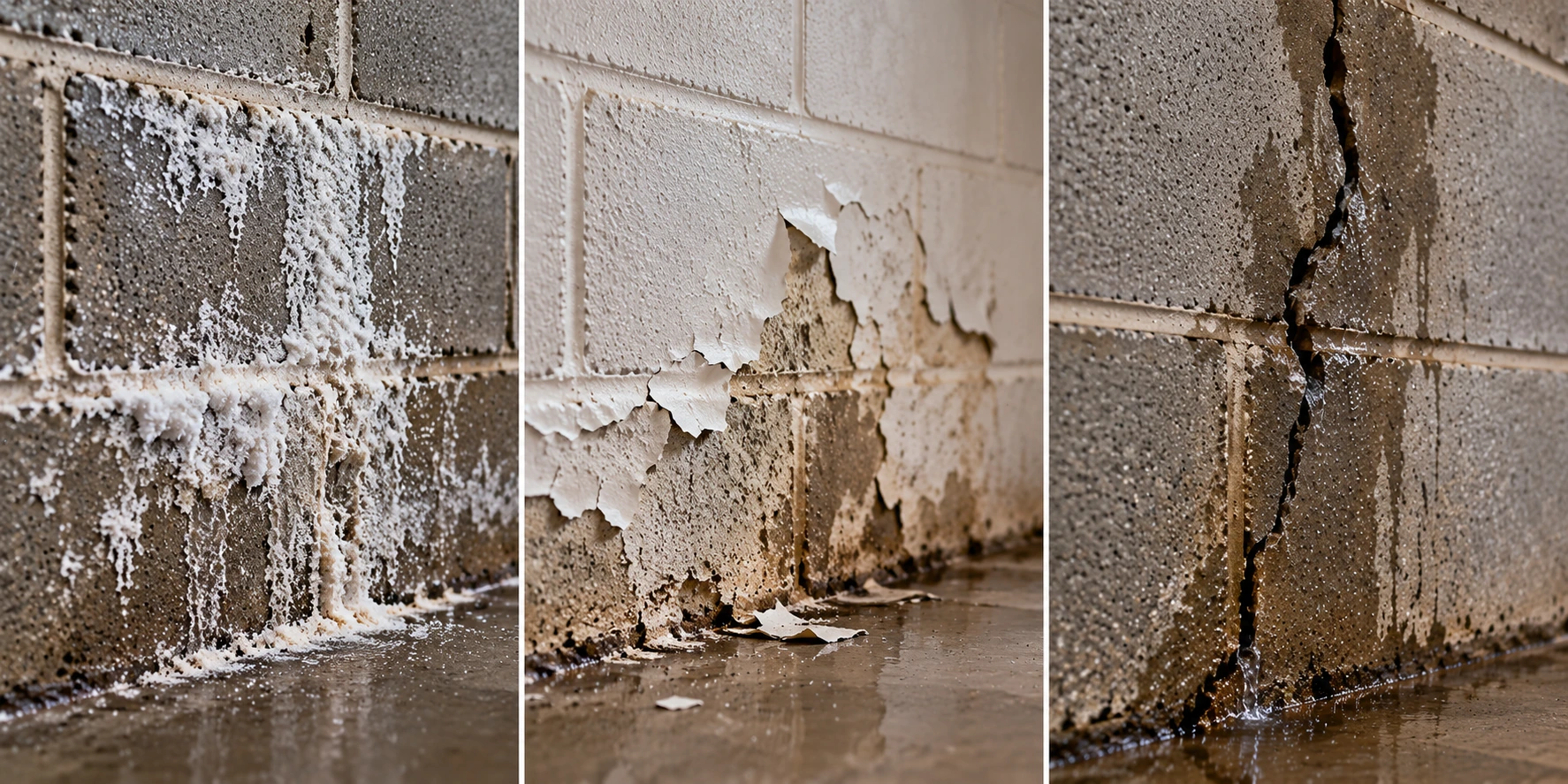
- White, chalky residue on the wall — This is usually efflorescence, which is left behind when water moves through masonry.
- Damp spots or dark patches — These show where water is entering or collecting on the wall.
- Peeling paint or bubbling finish — Moisture is pushing water vapor through the wall surface.
- Small cracks widening over time — This can signal ongoing movement or pressure on the foundation.
- Rust on metal items or appliances — Humidity is staying high enough to affect stored items.
- Cool, clammy air in the basement — That usually points to excess moisture even if you do not see standing water.
Health and Structural Impact
Moisture in a basement is more than a nuisance. It can affect your home’s structure, damage stored belongings, and make the air feel heavy or unpleasant. According to the EPA Indoor Air Quality guidelines, excess moisture can contribute to poor indoor air conditions and support mold growth.
That matters because air from the basement often moves into the rest of the house. If the wall is staying damp, the problem can spread beyond one corner and affect comfort, cleanup, and long-term repairs.
| Symptom | Likely Cause | Recommended Action |
|---|---|---|
| Musty odor | Hidden moisture or mold growth | Check for wet spots and improve airflow. If the smell returns, consider Indoor Air Quality and basement moisture solutions. |
| White powder on blocks | Water moving through masonry | Do not paint over it. Have the wall evaluated and ask about Basement Waterproofing Services. |
| Peeling paint | Damp wall surface or trapped moisture | Remove loose material and find the water source before refinishing. |
| Cracks in block or mortar | Foundation movement or water pressure | Schedule Foundation Crack Repair before the crack grows. |
| Bowing wall | Ongoing pressure from wet soil | Get a structural evaluation and ask about Bowing Basement Wall Repair. |
| Standing water after storms | Poor drainage or sump pump problems | Review drainage and consider an Interior Drainage System. |
Waterproofing Solutions That Work
1. Interior Drainage + SmartPower Sump Pump Battery Backup
This solution helps manage water that is already entering the basement so it can be collected and pumped away safely. It is often the best choice when you are figuring out how to waterproof a cinder block basement wall from the inside without trapping moisture in the blocks.
An Interior Drainage System channels water to a sump pump instead of letting it pool along the wall. Adding a SmartPower Sump Pump Battery Backup helps protect your basement during power outages and severe storms.
2. Foundation Crack Repair
If water is coming through a crack, that crack needs attention before any coating or finishing work goes on the wall. This repair is used when the wall has visible splits, leaking seams, or areas where water keeps finding the same path.
Our Foundation Crack Repair service helps seal those entry points so moisture is less likely to keep coming back. When the issue is tied to wider structural movement, it may also be wise to review Foundation Repair Services.
3. The EverDry Solution with DuraShield Coating
Sometimes a basement wall needs a full system, not just one repair. The EverDry Solution uses a multi-step approach, including DuraShield wall coating, to help protect the wall while still allowing moisture vapor to move safely.
That matters because trapping moisture behind the wall can make the problem worse. If you are learning how to waterproof a cinder block basement wall, this breathable approach is often part of a smarter long-term fix.
4. Stabl-Wall for Bowing or Buckling Walls
If the wall is bowing, leaning, or buckling, waterproofing alone is not enough. That means the wall is under pressure and needs stabilization before the problem grows.
Stabl-Wall Foundation Wall Stabilization helps support the wall and reduce further movement. It is especially important when moisture and soil pressure are working together against the foundation.
5. EZ-Breathe for Air Quality and Humidity Control
If the basement smells damp but you do not see major leaks, humidity may be part of the problem. An air-moving system can help reduce that stale, trapped feeling and support a drier basement environment.
EZ-Breathe Ventilation System is designed to help with humidity control, musty odor, and airflow. For homeowners concerned about the air they breathe, you may also want to read more about Indoor Air Quality.
6. Exterior Drainage Systems or Crawl Space Encapsulation
When water is coming from outside the home, improving exterior drainage may be the right long-term fix. This can be especially helpful if downspouts, grading, or soil saturation are sending water toward the foundation.
Our Exterior Drainage Systems help move water away before it reaches the basement wall. If your home also has crawl space moisture, Crawl Space Encapsulation may help protect the area below your home.
| Solution | Best For | Key Benefit |
|---|---|---|
| Interior Drainage + SmartPower Battery Backup | Recurring seepage and storm-related water | Moves water out before it collects on the floor |
| Foundation Crack Repair | Visible cracks or active leaks | Seals direct water entry points |
| The EverDry Solution with DuraShield | Walls needing multi-step protection | Helps manage moisture without trapping it |
| Stabl-Wall | Bowing or buckling walls | Supports and stabilizes failing walls |
| EZ-Breathe | Musty air and high humidity | Improves airflow and moisture control |
An Indianapolis Homeowner Story
A homeowner near Broad Ripple noticed a wet line along the bottom of a cinder block wall every time a heavy storm rolled through. At first, they tried wiping the wall dry and running a dehumidifier, but the problem kept returning.
After an inspection, the main issue turned out to be a combination of wall seepage and poor drainage around the home. EverDry Indianapolis recommended an Interior Drainage System, Foundation Crack Repair, and better moisture control with EZ-Breathe Ventilation System.
Once the water was being managed at its source and the basement air was drier, the space felt cleaner and much more usable. The homeowner also felt better knowing the wall was treated with a long-term plan instead of another temporary patch.
“We finally stopped guessing and got a real solution for our basement. The difference was noticeable after the system was installed.”
Is It Worth the Investment?
For most homeowners, the real value is in what you avoid by acting early. Waiting can mean more damage to drywall, flooring, stored belongings, electrical components, and even the foundation itself. If a small moisture issue turns into a structural problem, the repair becomes more complicated and disruptive.
That is why it helps to treat basement moisture as a home-protection issue, not just a cleanup chore. A smart plan now can reduce the chance of repeated repairs later and help protect comfort, safety, and resale confidence.
| Intervention | When to Act | Value or Risk Avoided |
|---|---|---|
| Drainage system installation | When water appears after rain or snowmelt | Helps prevent repeated flooding and floor damage |
| Crack repair | When you see a growing wall crack or seepage | Reduces the chance of wider water intrusion |
| Wall stabilization | When the wall bows or shifts | Helps avoid more serious structural movement |
| Humidity control | When the basement stays damp or smells musty | Helps protect air quality and stored items |
| Exterior water management | When gutters, grading, or downspouts send water back to the house | Helps keep water away from the foundation in the first place |
- Keep gutters clean and extend downspouts away from the house.
- Check the basement after heavy rain and look for new damp spots.
- Use a dehumidifier if the air feels sticky or smells musty.
- Look for cracks, peeling paint, or white residue on cinder block walls.
- Test your sump pump and backup system before storm season.
By the way, Schedule a FREE basement inspection with EverDry Indianapolis today. Our team can help you figure out whether you need drainage, crack repair, or a broader waterproofing plan.
Frequently Asked Questions
How to waterproof a cinder block basement wall without sealing in moisture?
You should focus on stopping water entry and managing moisture, not just coating the wall. Cinder block can hold and pass moisture, so trapping it with the wrong product can cause peeling or hidden damage later. A better first step is to find whether the problem is drainage, cracks, or humidity. If you want a safer long-term plan, review our EverDry Solution.
Can I just paint a cinder block basement wall to stop leaks?
No, paint alone usually will not stop a real water problem. It may hide stains for a while, but moisture can still move through the block or collect behind the finish. That can lead to bubbling, peeling, or moldy odors later. If you are seeing active seepage, look into Basement Waterproofing Services instead.
Why does my basement smell musty after it rains?
A musty smell usually means moisture is lingering in the basement, even if you do not see standing water. That odor often comes from damp materials, hidden leaks, or humidity that stays too high for too long. It matters because the smell can be a clue that the problem is still active. Start by checking for water stains and then consider EZ-Breathe Ventilation System for airflow support.
Do cinder block walls need interior drainage or exterior waterproofing?
They may need either one, or sometimes both, depending on where the water is coming from. Interior drainage helps manage water after it gets in, while exterior waterproofing tries to keep water away from the wall in the first place. The right choice depends on soil, grading, and the condition of the wall. A professional can help you compare options like Exterior Drainage Systems and interior solutions.
What are the warning signs that a cinder block wall is failing?
Common warning signs include cracks, bowing, water stains, and white residue on the wall. These signs often mean water pressure or foundation movement is affecting the wall over time. The sooner you address them, the more options you usually have. If the wall is visibly shifting, ask about Bowing Basement Wall Repair.
How often should I check my basement in Indianapolis?
You should check it after heavy rain, during spring thaw, and once during the most humid part of summer. Indianapolis weather can change quickly, so small issues may show up in different seasons. A simple walk-through can help you catch early signs before they spread. If you notice repeated dampness, consider a free inspection and ask about Basement Waterproofing Services.
Take the First Step Toward a Dry, Safe Basement
Schedule a FREE basement inspection with EverDry Indianapolis today. We have served local homeowners since 1978, and our work is backed by a Lifetime Transferable Warranty for added peace of mind.
When you need clear answers about how to waterproof a cinder block basement wall, our local team can help you understand the cause and recommend the right fix for your home.
