
What should basement humidity be? For most homes, a basement relative humidity reading between 30% and 50% is a practical target. The U.S. Environmental Protection Agency recommends keeping indoor humidity in that range and below 60%; in a basement, the number is most useful when you pair it with what you see, smell, and find around the foundation.
A humid basement is common enough to deserve attention, particularly during warm, muggy weather. It is not a diagnosis of a leak or a promise that waterproofing is needed. These five checks help Indianapolis homeowners separate a temporary indoor-air issue from moisture that warrants a closer look.
What should basement humidity be in an Indianapolis home?
Relative humidity is the amount of water vapor in the air compared with the most that air could hold at the same temperature. It changes with weather, indoor activities, and basement temperature. The EPA recommends keeping indoor humidity between 30% and 50% to control indoor moisture and help prevent mold; it also advises keeping relative humidity below 60%.
For a basement, aim for that 30%–50% range rather than treating one isolated reading as a pass-or-fail test. A short rise after a storm, laundry, or a hot shower upstairs calls for a different response than a level that stays elevated day after day.
| Reading | What it suggests | Check next | First action |
|---|---|---|---|
| Below 30% | Air may be unusually dry. | Confirm the hygrometer reading. | Avoid over-drying the space. |
| 30%–50% | EPA’s recommended indoor range. | Look for condensation or dampness. | Maintain current moisture controls. |
| 51%–59% | Above the target range. | Compare readings over several days. | Reduce indoor and outdoor moisture entry. |
| 60% or higher | Above the EPA’s below-60% guidance. | Check for water-entry signs. | Address the moisture source promptly. |
How to measure a basement humidity level
Use a simple hygrometer, which measures relative humidity. Put it on a shelf or table in the main basement area, not directly against a cool wall, beside a supply vent, or next to a dehumidifier. Those locations can make the reading less representative of the room.
Instead of checking once, note the reading at roughly the same times for about a week. Include a rainy day if one occurs. Write down whether windows were open, whether laundry was running, and whether the basement felt damp. That small record reveals a useful pattern: a number that falls once outdoor conditions change is different from a number that remains high regardless of weather.
Why summer air can make a basement feel humid
Many Indianapolis homes have unfinished or partly finished basements with cool concrete walls and floors. On a warm, humid day, opening basement windows can bring in moisture-laden outdoor air. When that air meets a cooler surface, condensation can form—much like water droplets on a cold drink.
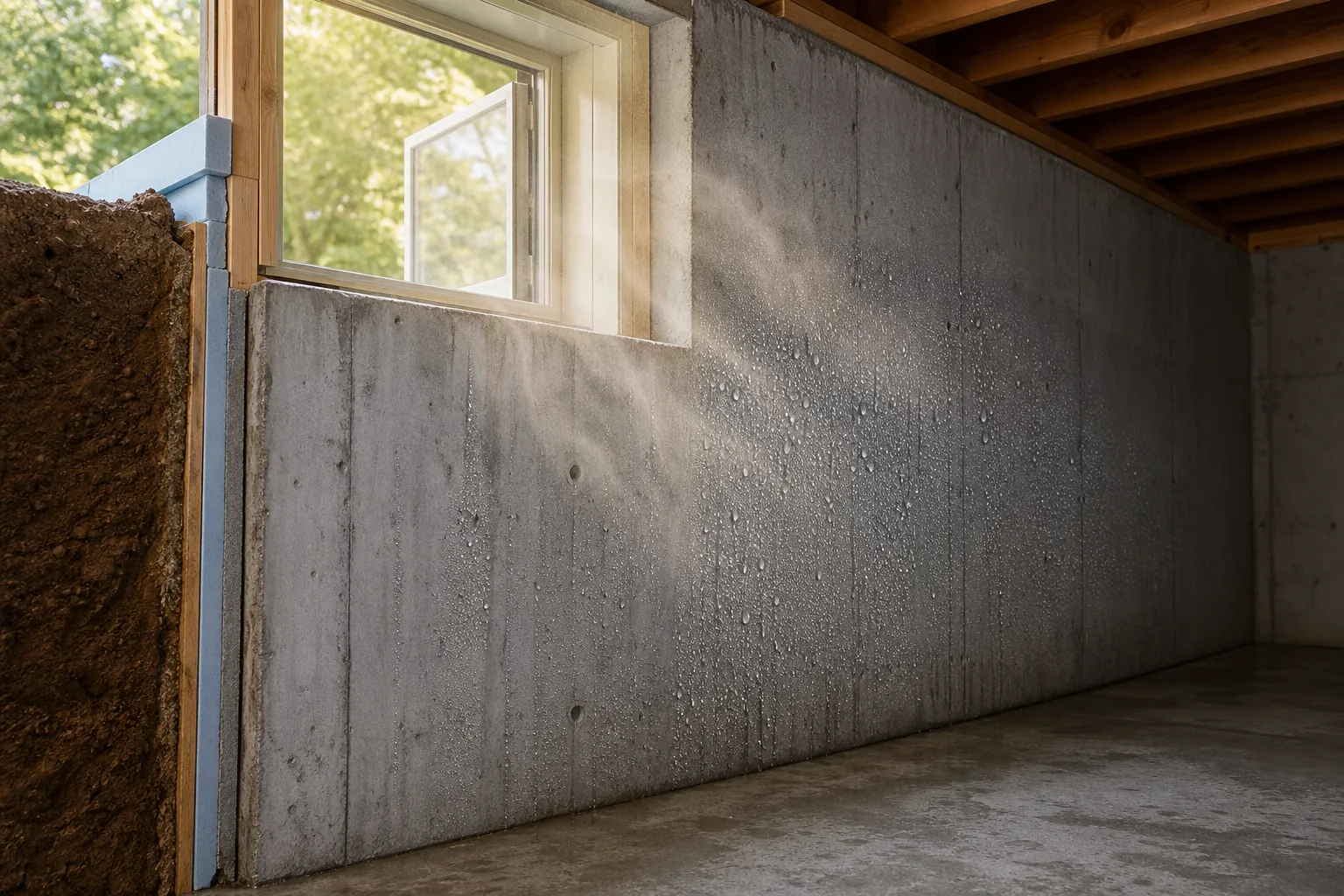
That is why “more fresh air” is not always the answer for a damp-feeling basement in summer. If opening windows coincides with higher readings or damp surfaces, close them and see whether the trend improves. This does not rule out water coming through the foundation, but it helps distinguish an air-condition issue from a persistent moisture source. For more on airflow choices, see this guide to basement ventilation.
Check 1: Is the reading high only on humid days, or all the time?
Compare your log with what happened outside and inside the home. A reading that rises after windows are opened on a muggy day, then settles after they are closed, points toward humid air entering the basement. A rise while laundry is drying or after repeated showers can point to indoor moisture generation, especially if the dryer is not venting outdoors.
A reading that remains high through changing weather deserves a broader inspection. Check whether the dehumidifier bucket fills steadily, whether a nearby plumbing line drips, and whether moisture is concentrated in one corner. Consistency, location, and timing are more informative than a single percentage.
Check 2: Do you see signs beyond the number?
Walk the basement with a flashlight and look for conditions that agree with the hygrometer:
- a persistent musty smell;
- damp patches on a wall or floor;
- condensation on cold pipes or windows;
- white, powdery mineral residue on masonry; or
- new staining, peeling finish, or water at the floor edge.
A musty smell does not identify the source on its own, and white residue does not establish when moisture entered. Still, these clues tell you where to focus. Read more about common basement moisture sources and what a musty basement smell can signal.
If you see suspected mold growth or water-damaged material, do not try to diagnose it from humidity alone. The EPA advises controlling moisture and fixing water leaks; a qualified professional can assess the moisture source and appropriate next step.
Check 3: Where might the moisture be coming from?
Look at the pattern before choosing a solution. Water or staining near the perimeter after rain suggests checking exterior water management first: overflowing gutters, downspouts that release close to the house, or soil that directs water toward the foundation. Older detached homes can also have landscaping, mulch, or stored material tight against the foundation, which makes drainage and inspection harder.
Moisture limited to a utility area may be related to plumbing, a dryer vent, or another indoor source. A damp wall, wet floor edge, or water around a sump pit is different: note exactly where it appears and whether it follows rain. An uncovered sump pit can add moisture to the air; learn about the role of a sump pit.
Do not seal a visible crack or cover a damp wall as a substitute for finding the water path. If water returns in the same place, professional evaluation can identify whether drainage, seepage, or another source is involved.
Check 4: What simple steps lower humidity?
Start with low-risk actions that fit the pattern you found:
- Keep basement windows closed when warm, humid outdoor air makes the basement reading climb.
- Run a dehumidifier according to its manufacturer instructions and use the hygrometer to see whether the room moves toward the target range. This overview of dehumidifiers and indoor air quality offers additional context.
- Confirm that a clothes dryer vents outdoors and use kitchen and bathroom exhaust fans during moisture-producing activities.
- Clear gutters, extend downspout discharge away from the foundation where appropriate, and correct obvious surface drainage that sends water toward the house.
- Remove stored cardboard or belongings from visibly damp floor areas so you can monitor the surface.
These steps can reduce humidity, but they cannot correct active seepage or a drainage problem by themselves. If a dehumidifier runs continuously with little improvement, shift attention from the air to the source of moisture.
Check 5: When is humidity a sign of a bigger moisture problem?
Schedule an inspection when humidity stays at or above 60% despite reasonable moisture-control steps, when it repeatedly returns after rain, or when you find water, recurring stains, damp floor edges, or a worsening musty odor. Those details do not confirm a specific repair, but they give an inspector useful evidence.
When to call a professional
Call promptly rather than investigating further if there is standing water, a wet electrical outlet or cord, a plumbing leak you cannot safely stop, or suspected mold growth that is widespread or keeps returning. Avoid handling electrical equipment on a wet floor. For persistent basement dampness, a professional can evaluate the moisture pattern, exterior drainage, foundation conditions, and options for basement waterproofing.
FAQ
What humidity should a basement be in summer?
The EPA’s recommended indoor range is 30%–50% relative humidity, including during summer. In a cool basement, also watch for condensation when warm outdoor air enters through open windows.
Is 60% humidity too high for a basement?
It is above the EPA’s guidance to keep indoor relative humidity below 60% and above its 30%–50% recommended range. Check the trend and look for moisture sources rather than relying on one reading.
What should I set my basement dehumidifier to?
Use the 30%–50% indoor target as a guide and follow the unit manufacturer’s instructions. If the setting is reached only briefly or the unit runs without lowering humidity, investigate the moisture source.
Can a basement be too dry?
Yes. A reading below 30% is below the EPA’s recommended indoor range. Confirm the reading before changing equipment settings, and avoid trying to make the basement as dry as possible.
Does a high humidity reading mean my basement needs waterproofing?
No. Humidity alone cannot identify the cause or prove a waterproofing repair is needed. A pattern of persistent high readings plus water-entry signs is a reason to arrange an inspection.
Get Help With Basement Humidity in Indianapolis
If your basement stays humid or shows signs of moisture, schedule a free inspection to identify what is feeding the problem and what to do next.
