
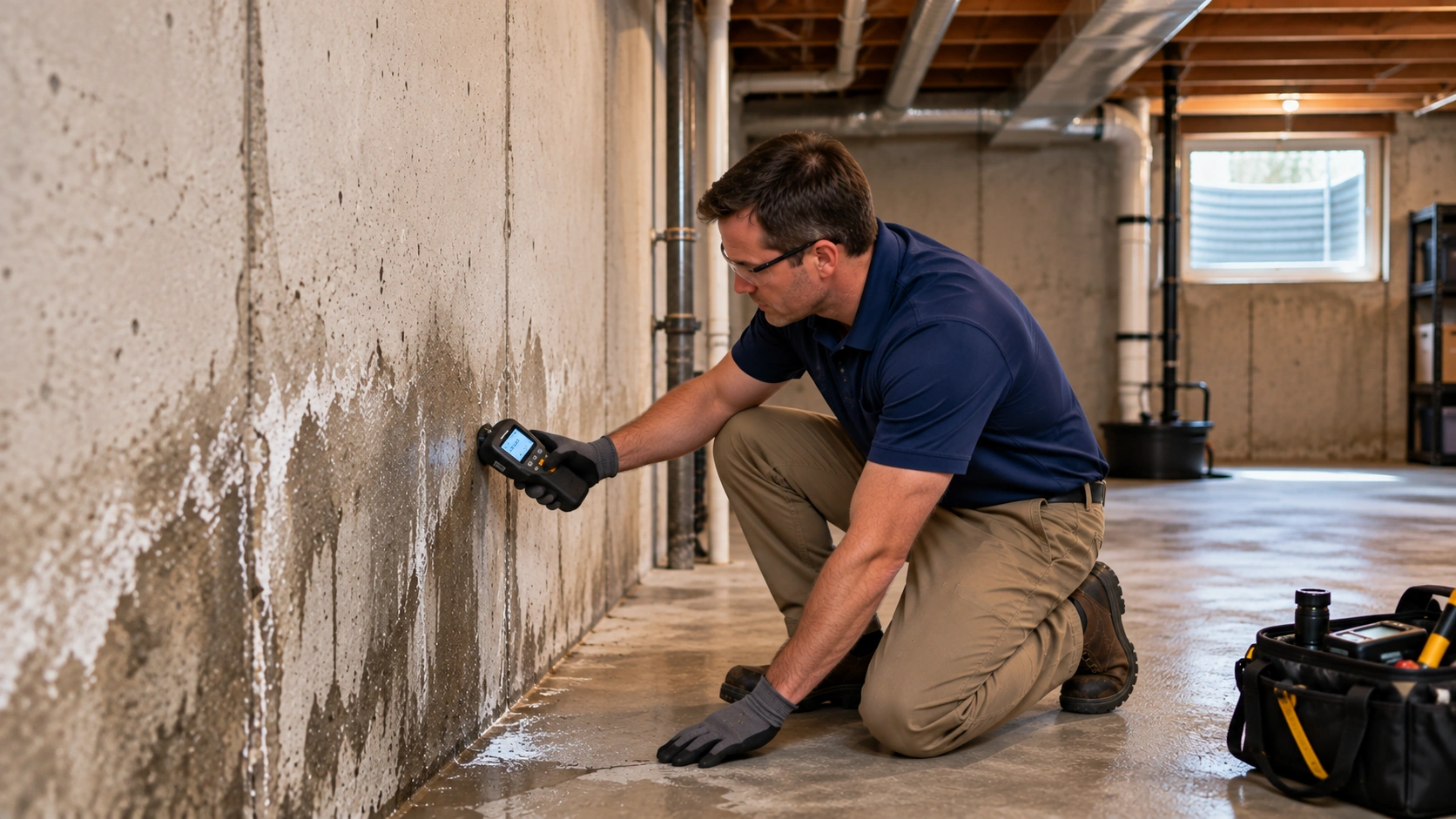
If you’ve started searching for basement waterproofing cost Indianapolis, you are probably seeing signs that your basement is not behaving the way it should. Maybe there is a damp smell, a small puddle after a storm, or white residue on the walls that keeps coming back.
That concern is common across Central Indiana. Clay-rich soils hold water, freeze-thaw cycles put pressure on foundations, and heavy spring storms can overwhelm older drainage systems. Add in a high water table in some neighborhoods near the White River and Fall Creek, and it becomes easier to see why many homes in Indianapolis, Carmel, Fishers, and nearby communities deal with moisture problems.
The good news is that most basement water issues can be understood, planned for, and fixed with the right approach. In this article, we’ll explain what drives basement waterproofing cost Indianapolis, what warning signs to watch for, which solutions solve different problems, and how to think about the long-term value of protecting your home.
At EverDry Indianapolis / EverDry Waterproofing of Indianapolis, we help homeowners choose the right fix for the problem they actually have, not just the symptom they can see.
Key Takeaways
- The real basement waterproofing cost Indianapolis depends on what is causing the water, not just how much water you see.
- In many homes, a targeted fix such as Interior Drainage System or Backup Sump Pump Installation may solve the issue without major disruption.
- Some problems point to bigger concerns, such as Foundation Crack Repair or Bowing Basement Wall Repair.
- Moisture is not just a comfort issue; it can affect air quality, structure, and future repair needs.
- Many homeowners also compare the importance of basement waterproofing for Indianapolis homeowners before deciding what to do next.
Why Indianapolis Homeowners Face This Problem
Homes in Indianapolis and across Central Indiana deal with a mix of conditions that can push water toward the basement. Clay soil drains slowly, so rainwater can sit against the foundation longer than you would expect. When that soil expands and contracts with changes in temperature, it can create pressure that finds weak spots in walls, floors, and joints.
That is one reason homeowners in Indianapolis, Fishers, and Greenwood often notice leaks after a long wet spell or a sudden thaw. Water that seems harmless outside can move toward the lowest part of the house, especially if gutters, grading, or drainage are not helping direct it away. If you want a broader look at leak patterns, our guide on why an Indianapolis basement leaks can help you connect the dots.
Sometimes the issue starts in the basement, and sometimes it begins around the home. Poor surface drainage, cracks, or an aging sump pump can all add to the problem. As noted by the EPA Indoor Air Quality guidelines, moisture control matters because damp spaces can affect the air you breathe inside your home.
Common Causes
Most basement water problems begin with one or more simple conditions working together. You do not need to know the technical terms to understand the big picture: water is finding a path in, and the home needs a better path out or a better barrier in the first place.
- Cracks in the foundation — Small openings in concrete or block walls can let water seep in. If the crack is growing, it may also point to movement that should be checked by a professional.
- Poor drainage around the home — When water pools near the foundation, it can move toward the basement instead of away from it.
- Failed sump pump system — A sump pump is the device that removes water from a low point in the basement. If it stops working, water can rise quickly during heavy rain or a power outage.
- High humidity — Humidity means moisture in the air. Too much of it can create a musty smell, condensation, and conditions that support mold growth.
- Wall bowing or pressure damage — Bowing walls are walls that begin to curve inward from outside soil pressure. This is more than cosmetic and should be evaluated promptly.
- Crawl space moisture — If your home has a crawl space, moisture there can travel upward and affect the basement and the rest of the home.
Warning Signs You Shouldn’t Ignore
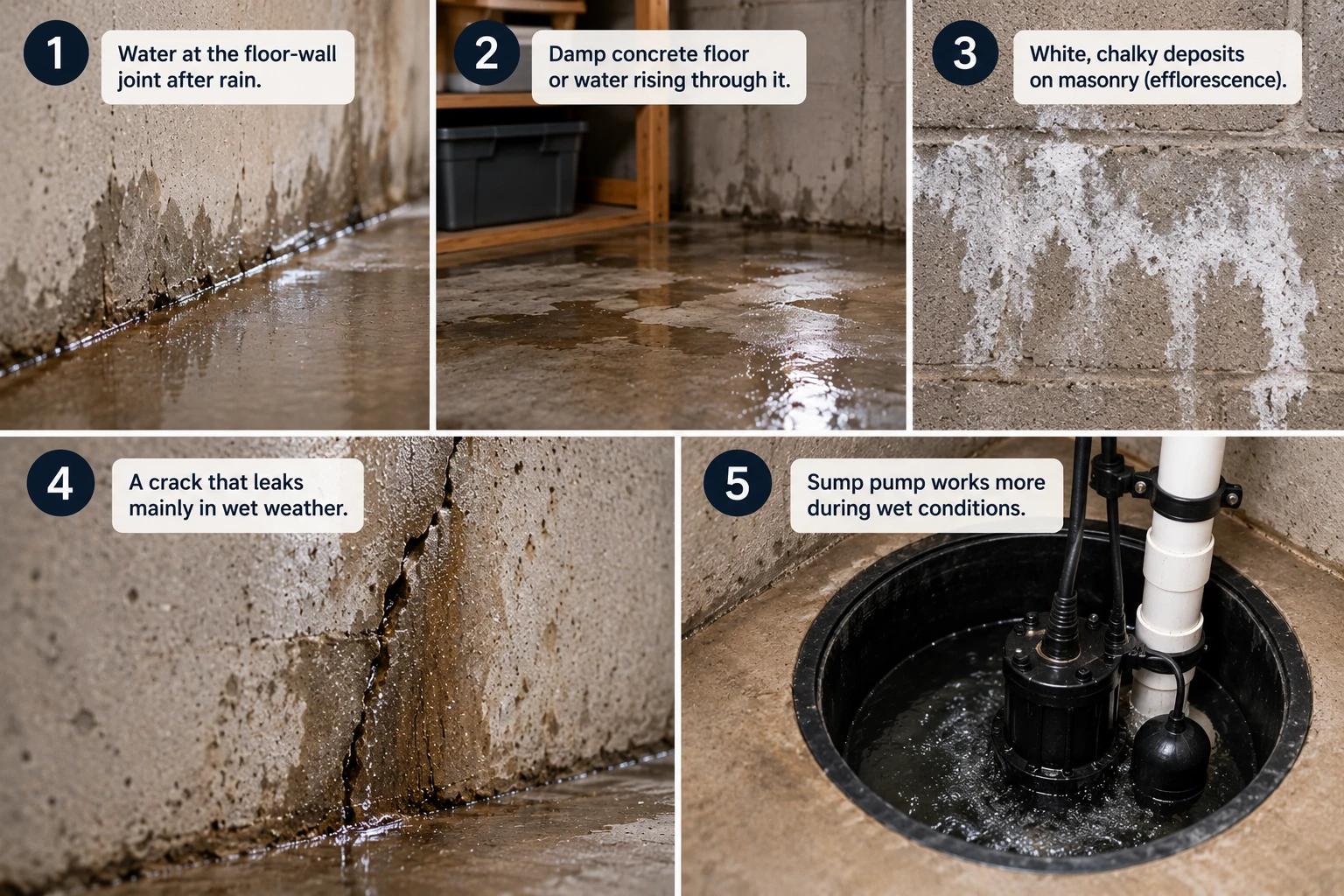
- Damp or musty smell — A smell that keeps returning often means moisture is collecting somewhere out of sight.
- Water stains on walls or floors — These marks show that water has already entered the space, even if it looks dry now.
- Efflorescence — This is a white, chalky residue left behind when water moves through masonry and evaporates.
- Peeling paint or flaking wall coating — Moisture can break down finishes and make the wall surface look worn.
- Cracks that widen or change — If cracks grow over time, the issue may be more than surface-level, and crack repair may be needed.
- Standing water after storms — Water on the floor is a clear sign the current system is not keeping up.
- Sticky indoor air or condensation — Moist air often means the basement is holding more humidity than it should.
Health and Structural Impact
Water in a basement is not only inconvenient. Over time, moisture can damage stored items, weaken materials, and encourage unhealthy conditions in the home. If the problem is left alone, a small leak can become a larger repair issue that affects both comfort and safety.
Moisture can also influence indoor air quality because damp basement air often moves upward through the house. If you are concerned about allergies, odors, or mold growth, the EPA’s EPA Mold and Moisture resources explain why fast moisture control matters. The right fix depends on where the water is coming from, which is why a professional inspection is so helpful.
| Symptom | Likely Cause | Recommended Action |
|---|---|---|
| Damp smell in basement | High humidity or hidden moisture | Check ventilation and consider EZ-Breathe Ventilation System |
| Water along wall base | Surface water or failed interior drainage | Review Interior Drainage System options |
| Hairline or widening wall cracks | Foundation movement or settling | Schedule Foundation Crack Repair |
| Inward-curving walls | Soil pressure against the foundation | Ask about Bowing Basement Wall Repair |
| Water during power outage | Pump failure without backup support | Consider Backup Sump Pump Installation |
| Persistent moisture in crawl space | Open soil, humidity, or poor sealing | Look into Crawl Space Encapsulation |
Waterproofing Solutions That Work
Interior Drainage System and SmartPower Sump Pump Backup
An Interior Drainage System helps move water to a controlled drainage path before it spreads across the floor. When paired with SmartPower Sump Pump Battery Backup, it gives your home better protection during storms and power outages. This is often a strong option when water enters from the wall-floor joint or when the current pump is not enough.
Foundation Crack Repair
If water is coming through a crack, Foundation Crack Repair can help stop that entry point and reduce future seepage. This is especially useful when the crack is actively letting in water or when you have noticed wall cracks changing over time. A repair should always address the cause, not just the visible line.
The EverDry Solution with DuraShield
The The EverDry Solution is a complete waterproofing system built to handle more than one moisture source at a time. It uses a multi-step approach, including DuraShield wall coating, to help guide water away and protect basement surfaces. For homeowners comparing basement waterproofing cost Indianapolis, this type of system can be a smart long-term choice when the issue is not a single leak.
Stabl-Wall Foundation Wall Stabilization
When walls are bowing or leaning, Stabl-Wall Foundation Wall Stabilization is designed to help support and reinforce that area. It is not a cosmetic fix; it is meant to address a structural concern that may worsen over time. If your wall looks like it is moving inward, it deserves prompt attention.
EZ-Breathe Ventilation System
EZ-Breathe Ventilation System helps with humidity control and air circulation in damp areas. This can be a practical choice when the basement feels stale, the air smells musty, or moisture is lingering even without visible water. Better airflow can make a meaningful difference in comfort and indoor air quality.
Exterior Drainage or Crawl Space Encapsulation
For water that begins outside, Exterior Drainage Systems may help move water away before it reaches the foundation. If the issue starts below the home, Crawl Space Encapsulation can seal the crawl space with a vapor barrier to reduce moisture and help protect the home above it. These solutions are often considered when the problem is tied to grading, seepage, or crawl space moisture.
| Solution | Best For | Key Benefit |
|---|---|---|
| Interior Drainage System | Water entering at the wall-floor joint | Collects and redirects water safely |
| Backup Sump Pump Installation | Homes that flood during outages or major storms | Provides added protection when power is lost |
| Foundation Crack Repair | Visible cracks that let water in | Seals entry points and helps prevent seepage |
| The EverDry Solution | Homes with multiple moisture concerns | Offers a complete multi-step approach |
| Stabl-Wall Foundation Wall Stabilization | Bowing or leaning walls | Supports and reinforces structural walls |
| Crawl Space Encapsulation | Open or damp crawl spaces | Reduces moisture entering from below |
For a wider look at how water problems often start, you may also find these helpful: Water in my Basement: How Did It Get There & What Can I Do?, Causes of Bowed Basement Walls and How to Fix Them, and Causes of Basement Floor Cracks and When to Take Action.
When you are weighing basement waterproofing cost Indianapolis, think about what each solution protects you from later. A smaller fix now can sometimes help you avoid damage to flooring, belongings, drywall, or the foundation itself. If humidity is part of the problem, energy-saving guidance from the U.S. Department of Energy can also help homeowners understand why moisture control and home efficiency often go hand in hand.
Mini Case Study: A Typical Indianapolis Basement Leak
A homeowner in Central Indiana notices a damp line along the basement wall after repeated spring storms. The basement smells musty, a few boxes are beginning to show moisture damage, and the sump pump seems to run often but still misses water during heavy rain.
After an inspection, the likely cause is a combination of surface water collecting near the home and a drainage system that is not keeping up. In this type of situation, EverDry Indianapolis may recommend an Interior Drainage System along with Backup Sump Pump Installation and a moisture-control solution if needed.
That kind of plan does more than dry the floor. It helps protect stored items, lowers the chance of repeated leaks, and gives the homeowner a clearer understanding of the real basement waterproofing cost Indianapolis based on the problem rather than the guesswork.
“Our goal is not just to stop the water you see today, but to help protect the home from the conditions causing it.”
Is It Worth the Investment?
For most homeowners, the better question is not simply what waterproofing costs, but what postponing it could cost later. Ongoing moisture can damage flooring, warp materials, encourage mold, and make foundation issues harder to ignore. If a leak is tied to structure, the risk of waiting often grows faster than the repair itself.
That is why many homeowners compare the likely cost of repair with the value of avoiding repeat damage. In that sense, basement waterproofing cost Indianapolis is really about protecting your home’s function, comfort, and resale confidence. The right fix can also make maintenance easier and reduce the stress of every heavy rain.
| Intervention | When to Act | Value or Risk Avoided |
|---|---|---|
| Interior drainage | When water collects at the wall-floor joint | Repeated puddles and floor damage |
| Foundation crack repair | When cracks are visible or leaking | Ongoing seepage and widening damage |
| Backup sump pump | When outages or pump strain are a concern | Flooding during storms or power loss |
| Crawl space encapsulation | When moisture is rising from below | Humidity, odors, and damage spreading upward |
| Wall stabilization | When walls bow or lean inward | Structural worsening and larger repairs |
- Check gutters and downspouts so water moves away from the foundation.
- Keep soil graded away from the house where possible.
- Look for new cracks, stains, or odors after storms.
- Test the sump pump regularly, especially before wet seasons.
- Watch humidity in the basement and consider ventilation if it stays high.
If your basement or crawl space is already showing signs of moisture, our article on 5 Quick Crawl Space Waterproofing Tips may also help you take a few smart first steps.
Frequently Asked Questions
How do I know if I need basement waterproofing or just a small repair?
If the problem is limited to one crack or one damp area, a targeted repair may be enough. If water shows up in several places, or if the basement smells musty after rain, the issue is often broader. A simple inspection can help you separate a small fix from a larger drainage problem. For a deeper sense of the signs, see why an Indianapolis basement leaks.
Does basement waterproofing cost Indianapolis homeowners more if the problem has been going on a long time?
Often, yes, because water can create additional damage over time. What starts as a seepage issue may eventually affect drywall, flooring, or structural materials. The sooner you address it, the more likely you are to keep the fix focused. A good first step is to contact our team for an evaluation.
What is the best solution if water comes in after heavy rain?
That often points to drainage and pump support, not just a wall issue. An Interior Drainage System with a backup pump may be a strong fit when stormwater is the trigger. It helps move water out before it spreads across the basement floor. If the water is persistent, an inspection can show whether another issue is also involved.
Can humidity alone make my basement smell bad?
Yes, high humidity can create a damp or musty odor even if you do not see standing water. That smell is often a sign that moisture is lingering in the space and should be managed. A practical next step is to look at ventilation and crawl space conditions, including EZ-Breathe Ventilation System if air movement is part of the issue. Good airflow can make the basement feel much more comfortable.
Is foundation crack repair enough if I also have water around the wall?
Sometimes a crack repair helps, but not every leak is caused by a crack alone. Water may also be entering because of drainage, hydrostatic pressure, or flaws elsewhere in the system. That is why it is important to understand the full path water is taking. If needed, Foundation Crack Repair can be combined with other measures.
How can I protect my home during power outages?
A battery backup helps keep the pump working when the power goes out, which is when some basements are most at risk. That is especially important during storm season, when the pump may be needed most. If you already have a sump pump, ask whether a backup system makes sense for your home. You can learn more about Backup Sump Pump Installation before a storm catches you off guard.
Take the First Step Toward a Dry, Safe Basement
Schedule a FREE basement inspection with EverDry Indianapolis today. Our local team understands Central Indiana homes, and we stand behind our work with a Lifetime Transferable Warranty. If you want clear answers about moisture, leaks, or structural concerns, a free inspection is a low-pressure way to start.
EverDry Indianapolis brings local experience, practical options, and a homeowner-first approach to every visit. Whether you live in Indianapolis, Carmel, Fishers, Noblesville, Westfield, Zionsville, Greenwood, Avon, Plainfield, or Brownsburg, we are here to help you make a confident decision.
